workshop 26

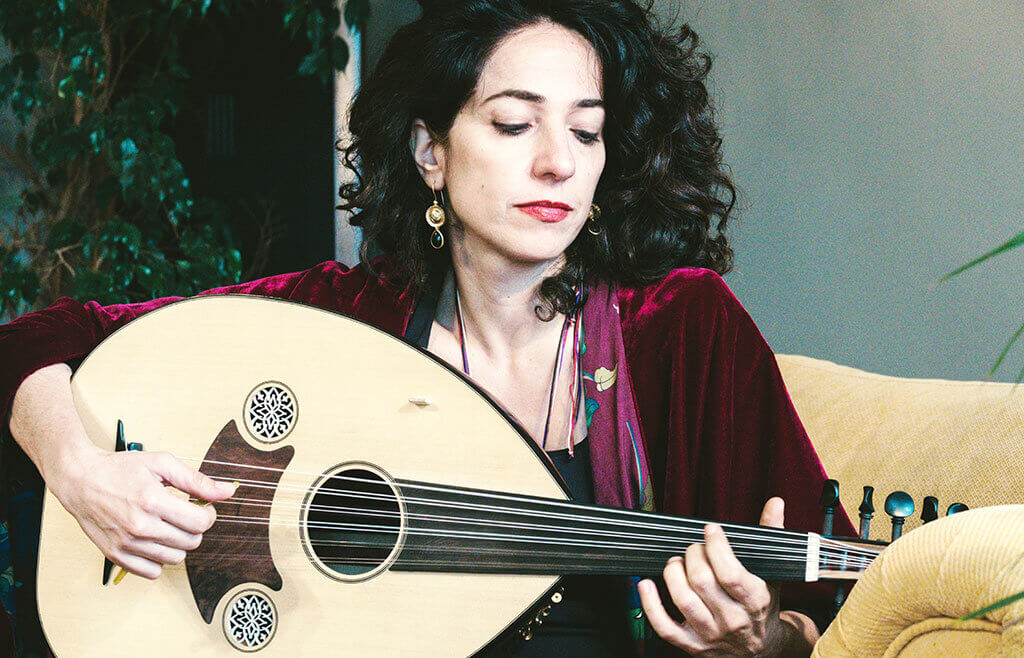
Between Arabic and Turco-Ottoman Art Music – Music workshop with Lamia Yared 1024 691 dancecenter

Between Arabic and Turco-Ottoman Art Music – Music workshop with Lamia Yared

April 29 – May 2, 2026
Wednesday, the 29th: 10:30–16:30
Thursday, the 30th: 10:30–16:30
Friday, May 1st: 10:00 – 13:00 and 17:00-20:00
Saturday, May 2nd: 15:00 – 22:00

Info & registration: https://forms.gle/Zku4NUE3vfWa6qPMA

Between Arabic and Turco-Ottoman Art Music
Music workshop with Lamia Yared

Explore the musical heritage of the Levant in dialogue with the Turkish Ottoman repertoire in a workshop led by Lamia Yared, singer and oud player.
This workshop offers training in the repertoire of classical Arabic music from the Levant and Ottoman Türk Sanat Müziği, through the following genres:

  • The Muwashshaḥ
    A poetic genre of Arab art music originating in Syria, the muwashshaḥ developed in Aleppo from the 17th century onward. Its name derives from the word wishāḥ, meaning an ornamented shawl adorned with pearls. Like this ornament, the muwashshaḥ is distinguished by its rich and elaborate melodic aesthetics and its complex rhythmic cycles.
  • The Şarkı
    In the Ottoman context, the term şarkı refers to a specific genre of Ottoman classical music—an art song that formed one movement within a larger musical suite known as a fasıl. When examined alongside the Muwashshaḥ, both genres reveal shared aesthetic principles, including strophic form, modal development, and the close integration of poetic and musical structures.

Levels: Beginner and intermediate levels
Duration: 25 hours (including the final concert)

Workshop Objectives

Participants will engage with these repertoires through a practice combining voice and instruments, within an approach that integrates oral transmission and theoretical reference points.
The workshop aims to:
• Introduce the techniques of classical Arab and Turco-Ottoman singing
• Explore nuances of intonation between Arab and Turco-Ottoman traditions
• Become familiar with maqām-s (Arab musical modes) and their correspondences with certain Ottoman maqams
• Work on the interpretation of vocal pieces from the Syrian and Egyptian traditions, alongside Turco-Ottoman vocal repertoire

Two key figures are involved in this project:

Iyade Khalaf is the Artistic Director of La Corde Sensible Musique, an association founded in Greece in March 2022 and now based in Paris, France. An oud player himself, he leads the association’s mission to promote traditional Mediterranean music by fostering the mobility of young artists from this region, supporting their training through workshops and artistic residencies, facilitating the dissemination of their works, and encouraging encounters between diverse musical traditions.

Lamia Yared, who will lead the masterclass presented in this application, is a singer and oud player of Lebanese origin. She specializes in the repertoires of classical Arabic and Ottoman music and is deeply committed to projects aimed at preserving the musical heritage of the Eastern Mediterranean. Her past productions include Chants des Trois Cours (2019), acclaimed by Songlines magazine, and Ottoman Splendours (2022), released under the Analekta label. Her upcoming album, From Minho to Euphrates (2025), is a collaboration with Efrén López.
Together, they bring complementary expertise, combining artistic direction, oud performance, intercultural dialogue, and internationally recognized artistry to ensure the success and impact of the project.

Organized by La Corde Sensible Musique in partnership with Akropoditi Dance Centre

www.lamiayared.com/fr/projects
www.instagram.com/lacordesensiblemusique
www.facebook.com/LaCordeSensibleMusique

APPLICATION

    Add to Newsletter !

    Masterclass by Mara Natterer 1024 691 dancecenter

    Masterclass by Mara Natterer

    Sunday March 8th 2026, 11:00 – 13:00
    Free submission

    Apply: until Friday 6 March
    Monday-Friday 17:00-21:00, phone num.: +30 22810-80690

    shake the nice girl out! – dance & improvisation workshop around female socialized anger

    In this masterclass, participants will engage in physical research to uncover what lies beyond our social and gender-biased conditioning. We’ll work with shaking as a way of unlearning control and reconnecting with the authentic impulses of the body. As the body’s oldest response to stress and a means of self-regulation, shaking becomes a ritual of release and softening into our physical instincts. Drawing from the raw, expressive vocabularies and rituals of Krump and Butoh—forms that defy conventional aesthetics of beauty—we will investigate how the body can channel, transform, and reclaim suppressed emotion and our innate wilderness. The focus does not lie in reproducing a specific form, but in finding a potential movement vocabulary to embody an inner state. This practice is not only informed by my work WUTBRUST, but also by my professional background as a body therapist and my ongoing research into the human nervous system, exploring ways of un-numbing and un-taming. Through guided improvisation, movement tasks, and collective reflection, I aim to offer a safe and trauma-informed space for embodied exploration on both a personal and collective level.

    The masterclass is open to FINTA* people 

    Ages: 15+
    Level: open to all levels

    Mara Natterer

    Mara is a dancer and craniosacral therapist. She teaches contemporary dance, movement, and contact improvisation in Switzerland and internationally. She studied International Relations in Geneva and later worked in the field of human rights for the Heinrich Böll Foundation in Brazil. Mara holds a Master’s degree in Community Dance from the Laban Conservatoire of Music and Dance in London and has led community dance projects in England, Brazil, Spain, and Switzerland, as well as with students from various universities in Germany and Switzerland. As a freelance dancer and co-choreographer, she has collaborated with numerous choreographers in Switzerland and abroad (e.g., Rahel Lopez de la Nieta, Heidi Rustgaard, Alexandra Prici, Elenita Queiroz). She also choreographs for large-scale theatre productions. In 2022, Mara received a Dance Grant from the Appenzell Ausserrhoden Cultural Foundation for her project BERÜHRBAR. Since 2023, she has been the director of Laboratoire Paul, a format for interdisciplinary collaboration as part of the Paula Interfestival (www.paula-interfestival.ch). In 2024, she received the Canton of St. Gallen’s Work Grant for her project Hauten Baby!, which explores trauma-sensitive practices in the performing arts.

    APPLICATION

      Add to Newsletter !

      2nd Feldenkrais Courses Cycle 2025-26 1024 691 dancecenter

      2nd Feldenkrais Courses Cycle 2025-26

      4 February – 25 March
      (EVERY WEDNESDAY, 19:30 – 20:45)

      Apply: until Friday 30 January
      Monday-Friday 17:00-21:00, phone num.: +30 22810-80690

      Fee: 
      Full cycle (8 courses): 65 euro
      Half cycle (4 courses): 40 euro
      Drop in: 12 euro

      * Attendance in the courses must be declared at the beginning of each course cycle.
      The courses continue throughout the year.

      Body Re-education Lesson
      A lesson of body re-education aiming at improving mobility and functionality of the body.
      Through the Feldenkrais Method, we re-educate the musculoskeletal organization of the body, which is essential for functional movement.
      It benefits those who suffer from neuromusculoskeletal and chronic pain, as well as those who wish to expand their movement abilities.
      The lessons are suitable for all ages and no previous experience in movement is required.

      WHAT IS THE FELDENKRAIS METHOD
      The Feldenkrais Method, named after the Israeli Dr. Moshe Feldenkrais who created, taught, and spread it, is a method of body re-education aimed at improving mobility. It focuses on the relationship and interaction between our nervous and musculoskeletal systems, targeting their balanced cooperation, which is essential for the ergonomics and precision of every human action. It helps the individual improve many aspects of daily life — from simple walking or sitting to performance in more demanding activities.
      It uses gentle movements designed to increase range of motion, ease of movement, and the overall functionality of the human body.
      It benefits people suffering from neuromusculoskeletal and chronic pain or with movement difficulties, as well as those who want to expand their movement abilities.

      LESSONS
      The Feldenkrais Method is applied in two ways:
      A. Group Lessons – ATM (Awareness Through Movement)
      In group lessons, students are invited to observe, sense, and become aware of their bodies through a structured sequence of movements and to explore a specific function. The teacher verbally guides the students by proposing simple and slow movements that promote muscular relaxation, without unnecessary effort, always within the limits of what is “easy and comfortable” for each person. This allows the individual’s posture to change through the adoption of a new movement pattern.
      Established, non-functional movement habits are replaced by new abilities and awareness. The focus of attention alternates between sensation, movement, awareness, and rest. This exploration aims at learning comfortable and efficient movement.
      The effect of the lessons is immediate and profound: the student learns how to learn. At the same time, vitality and efficiency in daily functions are enhanced. Muscle tone is regulated, posture is reorganized, movement gains greater range and ease, and pain is reduced or even disappears. Each lesson lasts about one hour and is a distinct unit, depending on the bodily function it addresses (e.g. spinal rotation, flexion, extension, etc.). Movements are carried out mainly lying on the floor — on the back, side, or stomach.
      B. Individual Lessons – FI (Functional Integration)
      These are one-on-one sessions lasting about an hour, conducted on a special table and adapted to the individual’s needs. In FI, the teacher moves the student’s body with slow and precise movements, exploring their movement habits and proposing (through touch) easier and more effective possibilities.
      Practically, the student remains passive, but in reality the body absorbs and integrates this new knowledge. As a result, less mobile areas are included in overall movement, while overloaded areas are released. Even after the very first session, the student perceives that they can move differently.

      BENEFITS
      • Improves movement and posture.
      • Identifies physical habits that strain the skeleton and hinder daily life.
      • Reduces pain in the lower back, neck, shoulders, back, knees, and more.
      • Contributes to injury rehabilitation and teaches how to prevent injuries in the future.
      • Improves coordination between body parts, facilitating movement, balance, and breathing.
      • Revives forgotten movements of the body.
      • Offers a sense of well-being and relaxation.
      • Teaches better management of stressful situations without creating tension in the body.
      • Helps us to better know ourselves through movement, to discover new possibilities, and to evolve.

      WHO IT IS FOR
      The Feldenkrais Method is suitable for all ages. It is recommended for people who suffer from chronic neuromusculoskeletal pain or have movement difficulties, for pregnant women, and for anyone wishing to expand their movement abilities, improve daily life, and strengthen body and mind.
      Musicians, actors, athletes, and dancers enhance their abilities and creativity. Older adults are supported in maintaining or regaining the ability to move without effort, difficulty, or pain.

      What to bring: a yoga mat, comfortable warm clothing, socks, a small blanket, and a pillow.

      Vasso Giannakopoulou (www.vassogiannakopoulou.gr) was born in Athens. She studied dance at D. Grigoriadou’s school, at the preparatory program of the State School of Dance (K.S.O.T.), and graduated from the Center of Performing Arts. She dedicated herself to the study of the human body, which led her to her later training in the Feldenkrais Method. Since 1990, her dance career has been enriched by her participation in international productions and her teaching of contemporary dance.
      Her first choreographic work, NightMirror (2003), was presented at the Kalamata International Dance Festival and the Athens Dance Festival. Together with Tasos Palaioroutas, she founded the Dalika Dance Theater (2004). Her works Digono, Fyllo kai Ftero, Pouthena, Eugenis Apodraseis, Maria Goes to the River, Pythonos 36, Flutter, have been presented at international dance festivals in Greece and abroad.
      She was part of the choreographic team of the 2004 Olympic Games opening and closing ceremonies, as well as the opening ceremony of the European Games in Baku 2015, under the artistic direction and staging of D. Papaioannou.
      She co-founded the Dance Association, through which a series of actions, choreographic workshops, and performances were realized at the Kalamata International Dance Festival, the Athens and Epidaurus Festival, and in theaters across Greece.
      She has directed movement in theater performances with directors including D. Xanthopoulos, D. Olbrychski, G. Mavraganis, N. Foskolou, among others.
      She is a certified Feldenkrais practitioner and teaches group and individual Feldenkrais lessons regularly in Syros and Athens. She has also led seminars in Zurich, Nafplio, Tinos, Heraklion (Crete), Patras, Aegina, Larissa, Chios, and in the professional dance schools of the Greek National Opera and Aktina.

      APPLICATION

        Add to Newsletter !