Monthly Archives :

February 2026

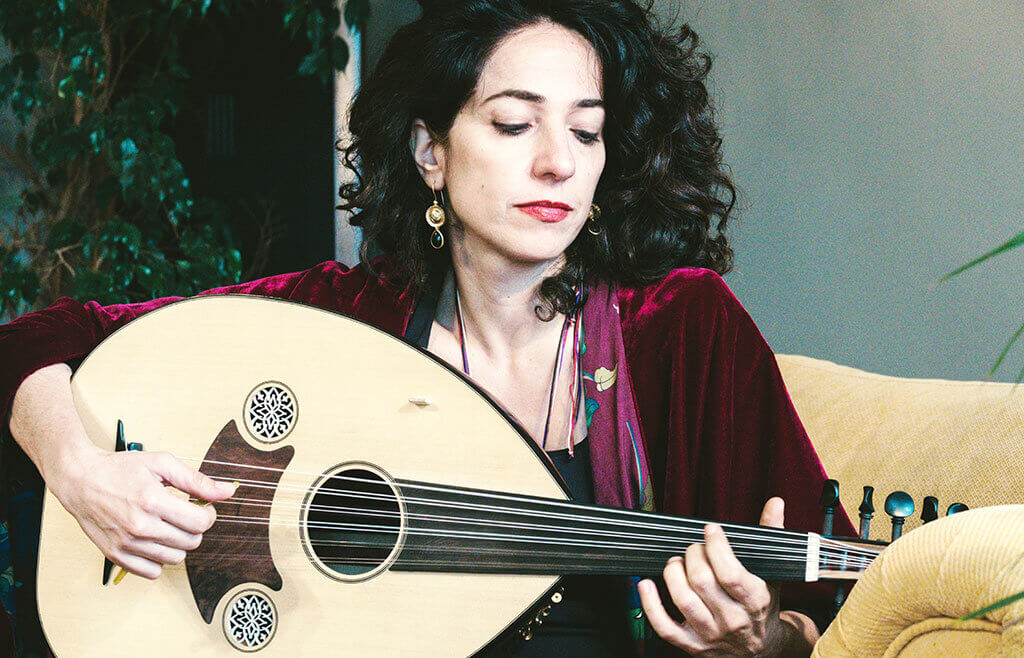
Between Arabic and Turco-Ottoman Art Music – Music workshop with Lamia Yared 1024 691 dancecenter

Between Arabic and Turco-Ottoman Art Music – Music workshop with Lamia Yared

April 29 – May 2, 2026
Wednesday, the 29th: 10:30–16:30
Thursday, the 30th: 10:30–16:30
Friday, May 1st: 10:00 – 13:00 and 17:00-20:00
Saturday, May 2nd: 15:00 – 22:00

Info & registration: https://forms.gle/Zku4NUE3vfWa6qPMA

Between Arabic and Turco-Ottoman Art Music
Music workshop with Lamia Yared

Explore the musical heritage of the Levant in dialogue with the Turkish Ottoman repertoire in a workshop led by Lamia Yared, singer and oud player.
This workshop offers training in the repertoire of classical Arabic music from the Levant and Ottoman Türk Sanat Müziği, through the following genres:

  • The Muwashshaḥ
    A poetic genre of Arab art music originating in Syria, the muwashshaḥ developed in Aleppo from the 17th century onward. Its name derives from the word wishāḥ, meaning an ornamented shawl adorned with pearls. Like this ornament, the muwashshaḥ is distinguished by its rich and elaborate melodic aesthetics and its complex rhythmic cycles.
  • The Şarkı
    In the Ottoman context, the term şarkı refers to a specific genre of Ottoman classical music—an art song that formed one movement within a larger musical suite known as a fasıl. When examined alongside the Muwashshaḥ, both genres reveal shared aesthetic principles, including strophic form, modal development, and the close integration of poetic and musical structures.

Levels: Beginner and intermediate levels
Duration: 25 hours (including the final concert)

Workshop Objectives

Participants will engage with these repertoires through a practice combining voice and instruments, within an approach that integrates oral transmission and theoretical reference points.
The workshop aims to:
• Introduce the techniques of classical Arab and Turco-Ottoman singing
• Explore nuances of intonation between Arab and Turco-Ottoman traditions
• Become familiar with maqām-s (Arab musical modes) and their correspondences with certain Ottoman maqams
• Work on the interpretation of vocal pieces from the Syrian and Egyptian traditions, alongside Turco-Ottoman vocal repertoire

Two key figures are involved in this project:

Iyade Khalaf is the Artistic Director of La Corde Sensible Musique, an association founded in Greece in March 2022 and now based in Paris, France. An oud player himself, he leads the association’s mission to promote traditional Mediterranean music by fostering the mobility of young artists from this region, supporting their training through workshops and artistic residencies, facilitating the dissemination of their works, and encouraging encounters between diverse musical traditions.

Lamia Yared, who will lead the masterclass presented in this application, is a singer and oud player of Lebanese origin. She specializes in the repertoires of classical Arabic and Ottoman music and is deeply committed to projects aimed at preserving the musical heritage of the Eastern Mediterranean. Her past productions include Chants des Trois Cours (2019), acclaimed by Songlines magazine, and Ottoman Splendours (2022), released under the Analekta label. Her upcoming album, From Minho to Euphrates (2025), is a collaboration with Efrén López.
Together, they bring complementary expertise, combining artistic direction, oud performance, intercultural dialogue, and internationally recognized artistry to ensure the success and impact of the project.

Organized by La Corde Sensible Musique in partnership with Akropoditi Dance Centre

www.lamiayared.com/fr/projects
www.instagram.com/lacordesensiblemusique
www.facebook.com/LaCordeSensibleMusique

APPLICATION

    Add to Newsletter !

    Masterclass by Mara Natterer 1024 691 dancecenter

    Masterclass by Mara Natterer

    Sunday March 8th 2026, 11:00 – 13:00
    Free submission

    Apply: until Friday 6 March
    Monday-Friday 17:00-21:00, phone num.: +30 22810-80690

    shake the nice girl out! – dance & improvisation workshop around female socialized anger

    In this masterclass, participants will engage in physical research to uncover what lies beyond our social and gender-biased conditioning. We’ll work with shaking as a way of unlearning control and reconnecting with the authentic impulses of the body. As the body’s oldest response to stress and a means of self-regulation, shaking becomes a ritual of release and softening into our physical instincts. Drawing from the raw, expressive vocabularies and rituals of Krump and Butoh—forms that defy conventional aesthetics of beauty—we will investigate how the body can channel, transform, and reclaim suppressed emotion and our innate wilderness. The focus does not lie in reproducing a specific form, but in finding a potential movement vocabulary to embody an inner state. This practice is not only informed by my work WUTBRUST, but also by my professional background as a body therapist and my ongoing research into the human nervous system, exploring ways of un-numbing and un-taming. Through guided improvisation, movement tasks, and collective reflection, I aim to offer a safe and trauma-informed space for embodied exploration on both a personal and collective level.

    The masterclass is open to FINTA* people 

    Ages: 15+
    Level: open to all levels

    Mara Natterer

    Mara is a dancer and craniosacral therapist. She teaches contemporary dance, movement, and contact improvisation in Switzerland and internationally. She studied International Relations in Geneva and later worked in the field of human rights for the Heinrich Böll Foundation in Brazil. Mara holds a Master’s degree in Community Dance from the Laban Conservatoire of Music and Dance in London and has led community dance projects in England, Brazil, Spain, and Switzerland, as well as with students from various universities in Germany and Switzerland. As a freelance dancer and co-choreographer, she has collaborated with numerous choreographers in Switzerland and abroad (e.g., Rahel Lopez de la Nieta, Heidi Rustgaard, Alexandra Prici, Elenita Queiroz). She also choreographs for large-scale theatre productions. In 2022, Mara received a Dance Grant from the Appenzell Ausserrhoden Cultural Foundation for her project BERÜHRBAR. Since 2023, she has been the director of Laboratoire Paul, a format for interdisciplinary collaboration as part of the Paula Interfestival (www.paula-interfestival.ch). In 2024, she received the Canton of St. Gallen’s Work Grant for her project Hauten Baby!, which explores trauma-sensitive practices in the performing arts.

    APPLICATION

      Add to Newsletter !

      Mara Natterer 1024 819 dancecenter

      Mara Natterer

      02/03/26 – 11/03/26

      Performing arts
      Title of the project: “WUTBRUST”
      Switzerland/Germany

      Description of project:
      This work is a personal and feminist exploration of female-socialized anger. Growing up as a girl, I learned to be “nice,” “beautiful,” and “harmonious.” This conditioning has shaped not only my identity but also how I move and create in dance. Beneath the smile, however, there is a lingering sense that something is missing—an unease, a silenced energy. In WUTBRUST, I investigate repressed, tamed, and internalized anger—the one hidden behind politeness, the one that turns inward and makes us sick—and that, in its self-abusive form, ultimately perpetuates victimhood and sustains patriarchal structures of power and dependency. I want to give space to the grotesque, raw, and “unfeminine” emotions that have long been stigmatized. Through the raw physicality of dance forms like Krump and Butoh—both emphasizing authentic, vulnerable expression that challenges mainstream aesthetics of “beauty”—I search for a movement vocabulary to embody these emotions. WUTBRUST combines contemporary dance, performance, and theatrical imagery in a deliberately raw, colorful, and contradictory aesthetic. The project seeks empowerment through embracing anger in its productive power as a transformative force—toward liberation from internalized norms and genuine equality.

      Open presentation: Saturday March 7th 2026
      20:00, Free Entrance

      Masterclass:
      shake the nice girl out! – dance & improvisation workshop around female socialized anger
      Sunday March 8th 2026, 11:00 – 13:00
      Free submission

      Mara Natterer

      Mara is a dancer and craniosacral therapist. She teaches contemporary dance, movement, and contact improvisation in Switzerland and internationally. She studied International Relations in Geneva and later worked in the field of human rights for the Heinrich Böll Foundation in Brazil. Mara holds a Master’s degree in Community Dance from the Laban Conservatoire of Music and Dance in London and has led community dance projects in England, Brazil, Spain, and Switzerland, as well as with students from various universities in Germany and Switzerland. As a freelance dancer and co-choreographer, she has collaborated with numerous choreographers in Switzerland and abroad (e.g., Rahel Lopez de la Nieta, Heidi Rustgaard, Alexandra Prici, Elenita Queiroz). She also choreographs for large-scale theatre productions. In 2022, Mara received a Dance Grant from the Appenzell Ausserrhoden Cultural Foundation for her project BERÜHRBAR. Since 2023, she has been the director of Laboratoire Paul, a format for interdisciplinary collaboration as part of the Paula Interfestival (www.paula-interfestival.ch). In 2024, she received the Canton of St. Gallen’s Work Grant for her project Hauten Baby!, which explores trauma-sensitive practices in the performing arts.

      Feedback

      Project Overview & Research Focus
      From October 22nd to November 13th, 2025, choreographers Ermira Goro (Athens) and Ildikó Tóth (Leipzig) conducted a three-week research residency for their new collaborative project, “Akómi,” at the Akropoditi Dance and Performing Arts Centre on the island of Syros, Greece.
      The purpose of this residency was to establish the foundational choreographic and spatial framework for Akómi. The work investigates how individual perception is shaped by dominant collective narratives, drawing conceptual inspiration from Christa Wolf’s  book Kassandra and the aesthetic minimalism of the Cycladic Spedos figurines.

      Residency Process and Methodology
      As this was the first time the two artists collaborated, the residency provided the essential studio time required to develop a shared movement language and identify common choreographic interests without the pressure of performance expectations. This dedicated research phase was crucial for exploring the project’s core themes—internalized pressure, stillness, and latent resistance—and translating them into a minimalist movement vocabulary.
      The use of a video camera served as an additional tool in the research, enabling the exploration of the moving body through different angles, frames, and excerpts—including close-ups, frog, and bird views. This approach was vital for not only documentation and reflection but also for deliberately distorting conventional visual perception and investigating new forms of physical intimacy and fragmentation within the developing material.

      Public Engagement
      At the end of the residency the local community was invited to an open presentation on Wednesday, November 12th, 2025 (13:00). This event offered the public direct insight into the evolving dialogue between movement and the core conceptual concerns of Akómi.

      Conclusion
      The time spent at Akropoditi successfully established the artistic foundation for Akómi. The residency allowed for a focused, deep dive into conceptual sourcing and material development, providing both artists with the groundwork necessary to transition the research into a full-scale production phase.